Robeson County, North Carolina
Robeson County has 17 towns on this site, with about 36,000 people between them. The county seat is Lumberton. It is part of the Lumberton, NC micropolitan area. Home prices across the county are up 24% from 2022 to 2025.
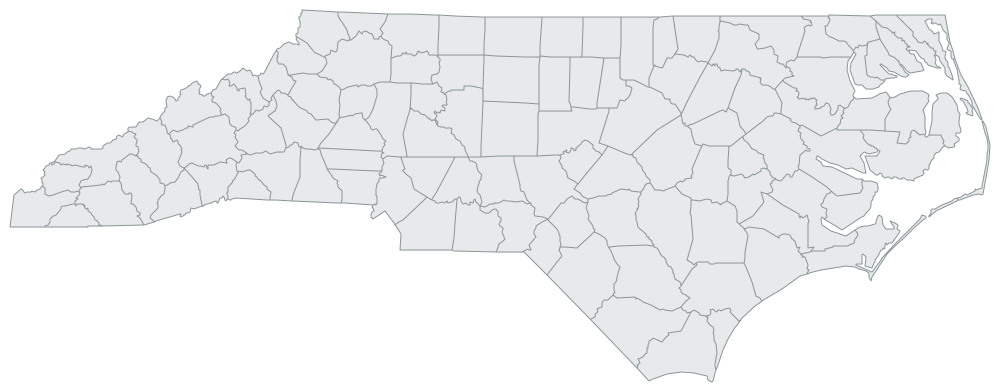
- Towns on this site
- 17
- People in these towns
- 35,858Census Bureau estimates, 2025, for incorporated towns; Census survey, 2020-2024, for unincorporated communities. The listed towns only, not the whole county
- County seat
- Lumberton
- County home prices
- Up 24%2022 to 2025, FHFA county house price index, 2025
- Everyday prices
- 11.6% below U.S. averageIn the parts of North Carolina outside metro areas; housing 40% below. BEA Regional Price Parities, 2024
- Rural-urban code
- 4 of 9Outside any metro area, with 20,000 or more people in its towns, next to a metro area (1 is the biggest metro areas, 9 the most rural counties). USDA rural-urban codes, 2023
- Nearest big metro
- RaleighAbout 67 miles from the closest town here, straight line
These lists count towns of 1,000 or more people; the table below has every town.
Closest to a big city
- St. Pauls73 miles to Raleigh
- Red Springs77 miles to Raleigh
- Barker Ten Mile82 miles to Raleigh
Straight-line miles to a metro area of about 1 million people or more.
Lowest home values
- Maxton$83,200
- Red Springs$100,800
- Fairmont$106,800
Typical value of an owner-occupied home, Census survey 2020-2024.
Growing fastest
- Red Springsup 4% since 2020
- St. Paulsup 3% since 2020
- Pembrokeup 3% since 2020
Census Bureau estimates, 2020 to 2025.
Every town in Robeson County
Select a column heading to sort. Miles are straight-line. Home values and incomes: Census survey 2020-2024; population: Census Bureau estimates, 2025, for incorporated towns; Census survey, 2020-2024, for unincorporated communities.
| Town | People | Since 2020 | Typical home | Household income | Miles to a big city | Miles to an ER |
|---|---|---|---|---|---|---|
| Lumberton | 18,955 | +0.3% | $152,600 | $42,877 | 86 | In town |
| Red Springs | 3,216 | +4.2% | $100,800 | $20,833 | 77 | 12 |
| Pembroke | 2,888 | +2.7% | $129,400 | $25,889 | 86 | 11 |
| Fairmont | 2,231 | +2% | $106,800 | $36,641 | 96 | 11 |
| Maxton | 2,149 | +2.2% | $83,200 | $22,667 | 86 | 7 |
| St. Pauls | 2,109 | +2.8% | $111,000 | $36,800 | 73 | 12 |
| Barker Ten Mile | 1,156 | $163,700 | $66,667 | 82 | 3 | |
| Prospect | 907 | $100,700 | 83 | 14 | ||
| Rowland | 906 | +2.3% | $118,000 | 97 | 9 | |
| Parkton | 514 | +2.8% | $151,900 | $56,250 | 67 | 10 |
| Rennert | 294 | +5.4% | $45,800 | 75 | 13 | |
| Proctorville | 122 | +2.5% | $75,625 | 96 | 11 | |
| Marietta | 111 | +3.7% | 105 | 14 | ||
| McDonald | 95 | +2.2% | $51,875 | 93 | 11 | |
| Lumber Bridge | 80 | +2.6% | 69 | 11 | ||
| Raynham | 64 | +3.2% | 92 | 11 | ||
| Orrum | 61 | +1.7% | 97 | 12 |
Big city: a metro area of about 1 million people or more. ER: the nearest hospital with an emergency room (Medicare hospital data). Towns here are incorporated places of up to 75,000 people and unincorporated communities of 250 or more; bigger cities and smaller places are not listed.
Across Robeson County
Each part says whether its figures are for the whole county or counted from the towns listed above.
Jobs
Robeson County, 2025: 5.3% unemployed (North Carolina 3.8%, U.S. 4.3%). In 2020 it was 9.1% (North Carolina 7.2%). Labor force: 44,232 people, down 2.4% since 2020.
2019 to 2025Figures for the whole county, not any one town. Annual averages, not seasonally adjusted. The 2025 figures average 11 months: BLS has no October 2025 data because of the federal government shutdown. 2020 was the pandemic year, so most counties show a big drop since then. U.S. rate from the BLS Current Population Survey.
Sources: BLS Local Area Unemployment Statistics, 2025; BLS Current Population Survey, 2025.
Doctors
Robeson County is a federal primary care shortage area for low-income residents. HRSA scores the need 19 on a scale of 0 to 25 (higher means greater need).
A shortage area is where HRSA counts too few primary care providers for the people there; the designation helps the area recruit doctors through federal programs. Status as of November 2026.
Source: HRSA shortage areas, November 2026.
Natural hazards
FEMA rates Robeson County's overall natural hazard risk Relatively Moderate, higher than about 91% of U.S. counties. Largest expected yearly losses in the county: hurricane, inland flooding and tornado. FEMA rates the county's social vulnerability Very High and community resilience Very Low.
County figures from FEMA's National Risk Index (version 1.20), not measurements for any one town. The ratings compare counties and are meant for planning.
Wildfire
Wildfire likelihood in the 17 towns listed here, each compared with U.S. communities: 1 Medium and 16 High.
Classes come from the percentile rank: Low under 40, Medium 40 to 70, High 70 to 90, Very High 90 and up.
Source: USDA Forest Service, Wildfire Risk to Communities, 2026.
Libraries
7 of the 17 towns listed here have a public library in town: 7 libraries in all, central and branch.
Counts the towns on this site only, not libraries elsewhere in the county.
Airports
Nearest commercial airport to a town here: Fayetteville Regional/Grannis Field (FAA code FAY) in Fayetteville, NC, 9.6 miles from Parkton: nonhub primary, 167,660 passenger boardings in 2025. Nearest large or medium hub: Raleigh-Durham International Airport (FAA code RDU) in Raleigh, NC, 69 miles from Parkton: medium hub, 7,670,956 passenger boardings in 2025.
Straight-line miles from the closest town on this site.
Sources: FAA passenger boardings, calendar year 2025; FAA airport data (NASR), 2026-10-29 cycle.
Nearby counties
Counties that share a town with Robeson County or hold its towns' nearest neighbors.
- Columbus County14 towns
- Hoke County5 towns
- Scotland County6 towns
- Dillon CountySouth Carolina, 7 towns
- Cumberland County9 towns
- Bladen County8 towns
- Marlboro CountySouth Carolina, 6 towns
- Marion CountySouth Carolina, 5 towns
Sources: Census Bureau population estimates, 2025; Census Bureau American Community Survey, 2020-2024; Census Bureau Gazetteer, 2025; Census Bureau boundary files, 2025; OMB metro and micro areas, 2023; FHFA county house price index, 2025; BEA Regional Price Parities, 2024; USDA rural-urban codes, 2023; Medicare hospital data, October 2026; BLS Local Area Unemployment Statistics, 2025; BLS Current Population Survey, 2025; HRSA shortage areas, November 2026; FEMA National Risk Index, December 2025; USDA Forest Service, Wildfire Risk to Communities, 2026; IMLS Public Libraries Survey, fiscal year 2024; FAA passenger boardings, calendar year 2025; FAA airport data (NASR), 2026-10-29 cycle. Compiled by Small Town Guide.